PublishedAugust 3, 2025
Debts You Still Owe After Bankruptcy: What You Can’t Erase
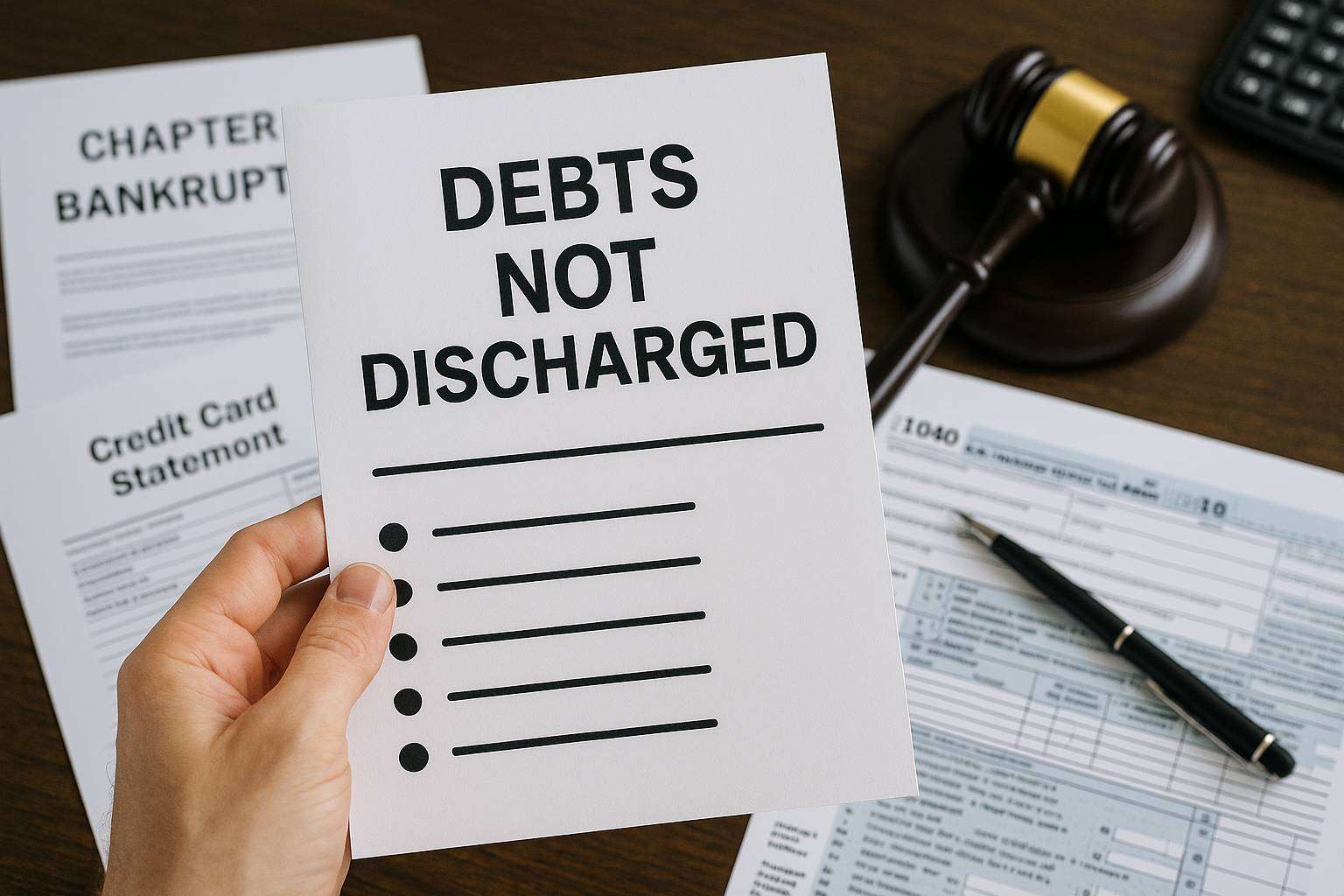

Filing for bankruptcy can provide powerful relief from overwhelming financial pressure. It can stop collection calls, halt lawsuits, and eliminate many types of unsecured debt like credit cards and personal loans. But not everything disappears after a bankruptcy discharge.
There are certain debts after bankruptcy that remain your legal responsibility—regardless of whether you file Chapter 7 or Chapter 13. These debts can affect your finances, your credit, and your future plans if not properly understood or managed.
If you’re thinking about filing for bankruptcy, it’s critical to know what’s included and what’s not. In this guide, we’ll walk through the excluded debts list, explain why certain obligations survive bankruptcy, and help you plan for the post bankruptcy bills you may still need to handle.
Let’s start with the good news: bankruptcy can eliminate a significant portion of your unsecured debt, especially if you file under Chapter 7. The following are typically dischargeable:
For many filers, this kind of relief provides a fresh start and a chance to rebuild. But not all debts go away, and understanding which ones don’t is key to making a smart decision.
Even after your case is discharged, some obligations continue—either because they’re legally protected from discharge or because you choose to reaffirm them. Here’s a breakdown of the most common debts after bankruptcy that remain:
Student loans are one of the most common debts that survive bankruptcy. They’re typically not dischargeable unless you can prove “undue hardship,” which is a high legal standard in most courts.
Most people continue paying these loans post bankruptcy unless they qualify for forgiveness or income-based repayment. If your student debt is weighing you down, talk to a counselor before filing to explore other relief strategies that don’t rely solely on bankruptcy.
While some older tax debts can be erased, most recent IRS debt—especially from the last 3 years—is non-dischargeable. The same goes for:
These appear consistently on any excluded debts list, and you’ll need to arrange payment after your bankruptcy case closes.
Domestic support obligations are never erased by bankruptcy. Whether it’s child support, spousal maintenance, or alimony, these obligations continue post bankruptcy in full.
If you’re behind on support, Chapter 13 can help you catch up through a structured repayment plan—but it won’t eliminate the balance.
If a creditor proves that your debt resulted from fraud, theft, or intentional harm, the court may decide that it cannot be discharged. This includes debts from:
These are case-specific, but if your bankruptcy involves questionable transactions, you may still owe those amounts afterward.
If you want to keep your house or car and are still making payments, you may choose to reaffirm the loan. This means agreeing to continue paying the secured debt (like a mortgage or auto loan) even after filing.
These post bankruptcy bills continue just like before and must be paid to avoid foreclosure or repossession. Bankruptcy gives you the option to walk away—but if you choose to keep the asset, the debt remains.
To summarize, here’s a general excluded debts list—obligations you still owe after filing bankruptcy:
If a debt isn’t included in your filing, the court won’t discharge it. That’s why it’s so important to review every account with a certified counselor or attorney before submitting your petition.
Filing for bankruptcy doesn’t mean you’re done with financial responsibilities. It just resets the game. If you’re left with ongoing post bankruptcy bills, you’ll need a plan to manage them responsibly.
Here’s how to prepare:
Once your discharge is finalized, review your bankruptcy paperwork and make a list of everything that remains. Include balances, payment amounts, and due dates.
Focus especially on:
This list will be your roadmap moving forward.
One of the best outcomes of bankruptcy is breathing room in your monthly finances. With fewer payments to make, you can now allocate more toward debts after bankruptcy that still exist—without falling behind again.
Set a realistic monthly budget, including rent/mortgage, food, transportation, and any surviving debts. Consider using the envelope method or a budgeting app to stay on track.
Even though bankruptcy may impact your credit initially, it’s also a chance to start fresh. Begin rebuilding by:
Paying all post bankruptcy bills on time
Keeping balances low if you get a secured card
Avoiding unnecessary credit for at least 6–12 months
Monitoring your credit report regularly
Our team at APFSC can guide you through this process with personalized action steps.
After bankruptcy, you may be targeted by high-interest lenders and credit repair scams. Be wary of anyone promising to erase your debts after bankruptcy or “fix” your credit overnight. Stick to proven, legal strategies with nonprofit guidance.
Filing for bankruptcy is not a decision to make alone. Whether you’re trying to decide if it’s the right move or you’ve already filed and are unsure how to handle remaining debt, our counselors at APFSC can help.
We can help you:
Bankruptcy isn’t the end—it’s a new beginning. But even after a discharge, certain debts after bankruptcy can still affect your financial life. By understanding the excluded debts list and preparing for post bankruptcy bills, you can protect your progress and avoid falling back into crisis.
If you’re unsure whether bankruptcy is the right step or need help navigating the after-effects, reach out to APFSC. We’re here with free, confidential support to guide you toward long-term stability—before, during, and after bankruptcy.
Blogs
Stay informed with expert tips, financial strategies, and the latest insights to help you take control of your financial future.
Contact us